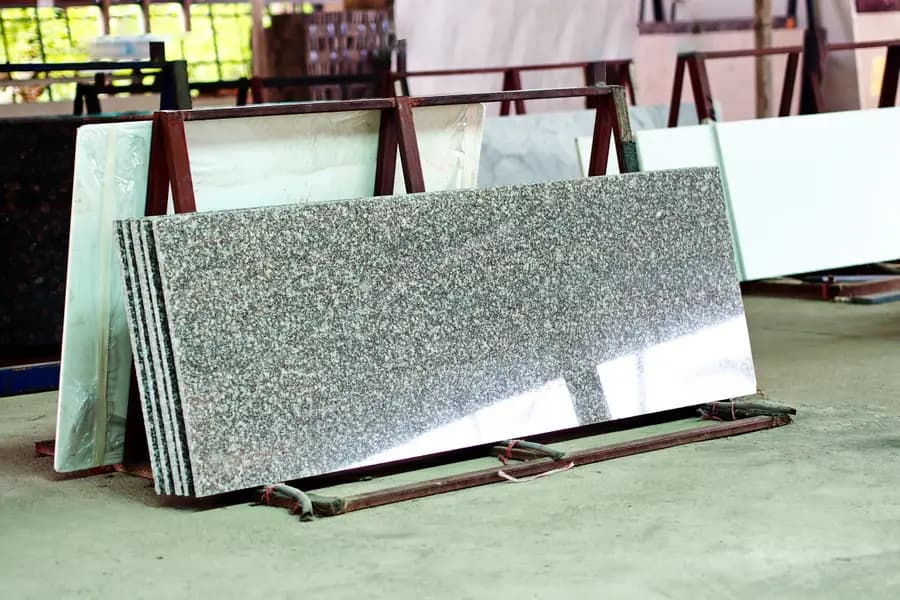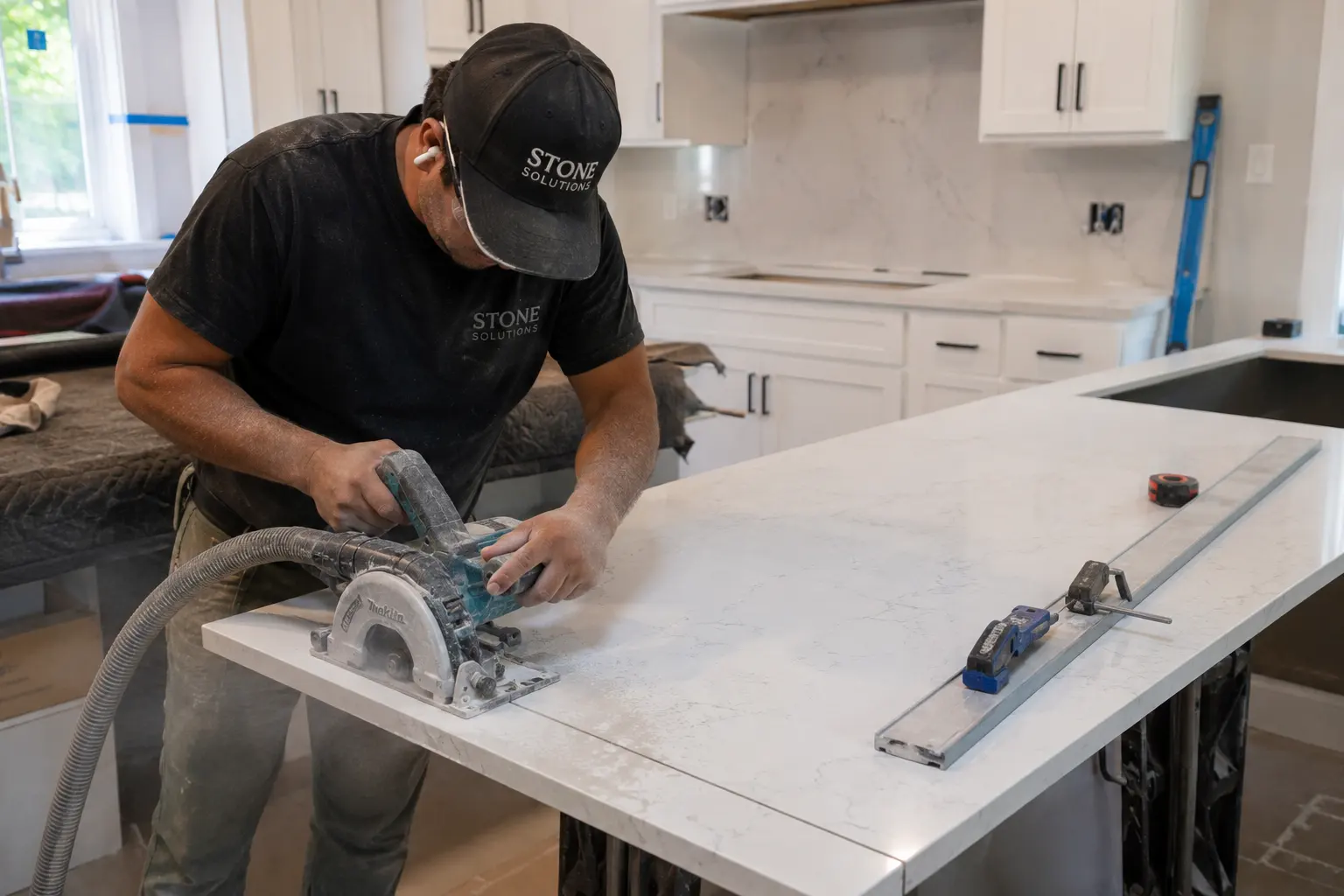
Engineered stone — the quartz slab sold under names like Caesarstone, Cambria, and Silestone — can contain as much as 90% crystalline silica, compared with under 45% for granite and under 10% for marble. Every time a fabricator cuts, grinds, edges, or polishes one of those slabs, it releases respirable silica dust fine enough to lodge deep in the lungs. Without wet-cutting, proper ventilation, and fitted respirators, the workers doing that job — countertop fabricators and installers, stone cutters, and polishers, along with construction, demolition, and sandblasting crews — breathe it in shift after shift, for years.
Inhaled silica causes silicosis, an incurable disease that permanently scars lung tissue and keeps progressing even after exposure stops. It also raises the risk of lung cancer, tuberculosis, COPD, kidney disease, and autoimmune conditions, and advanced cases can require a lung transplant or end in respiratory failure. One Australian study found at least 12% of workers who cut stone countertops had silicosis. Lawsuits allege the slab manufacturers and distributors knew of the hazard and failed to warn workers or provide adequate dust-control guidance. Cases are proceeding individually in state courts rather than a single MDL: a Los Angeles jury awarded one stone worker $52.4 million in 2024, and another fabricator with more than 20 years of exposure reached settlements totaling $26 million.
If you cut, ground, polished, or installed engineered or natural stone and were later diagnosed with silicosis, you may be able to bring a claim.

Every detail you share through this case review — your work and exposure history, the shops and job sites where you cut or installed stone, the products you handled, your diagnosis and medical records, and how silicosis has affected you — stays between you and our intake team. We do not sell, rent, or share your information with third parties, and your participation is never made public.
Damages vary by case, and every claimant's exposure history and diagnosis is different. Common categories of damages in silica dust and silicosis cases include:
Pulmonologist care, chest imaging and lung-function testing, bronchoscopy or biopsy, oxygen therapy, pulmonary rehabilitation, and prescription medication — treatment that manages a scarring lung disease for which there is currently no cure.
Silicosis is progressive. Later-stage costs can include continuous supplemental oxygen, home medical equipment, repeated hospitalization for respiratory infections, in-home caregiving, and evaluation for or the cost of a lung transplant.
Wages lost as breathlessness and fatigue make fabrication, installation, and physical work impossible, the career a diagnosis often ends outright, and the lasting reduction in earning capacity that follows.
Chronic cough, chest pain, disabling shortness of breath, the exhaustion of struggling for air, and the diminished quality of life caused by an incurable and progressive lung disease.
Silicosis raises the risk of lung cancer, tuberculosis, COPD, kidney disease, and autoimmune conditions such as scleroderma and rheumatoid arthritis — additional diagnoses that carry their own treatment costs and harms.
For families who lost a loved one to respiratory failure or other complications: funeral and burial expenses, loss of future financial support, and the companionship and shared life taken from a spouse or family.
Claims are brought against the manufacturers, suppliers, and distributors of engineered stone slabs and silica-containing products — companies including Caesarstone, Cambria, and Cosentino (Silestone) — on theories including negligence, design defect, failure to warn of the silicosis risk, and failure to provide adequate dust-control instructions or safety guidance. Where the conduct is found especially egregious, punitive damages may also be available. Filing deadlines are set by each state's statute of limitations and typically run from one to six years from the date of diagnosis or the date you learned your illness was linked to silica exposure, so the time available to bring a claim may be limited.
See if You QualifyAt DuBose Law Firm, PLLC, we represent stone fabricators, installers, cutters, and their families in claims against the manufacturers and suppliers of engineered stone and silica-containing products. Our attorneys work closely with each client to reconstruct the years of workplace exposure a case depends on, and to pursue accountability from the companies that kept selling a product they had reason to know was dangerous to the people cutting it.
Our attorneys handle complex product-liability and toxic-tort cases against manufacturers and suppliers — litigation that turns on reconstructing years of workplace exposure, identifying which products a worker handled, proving medical causation, and uncovering what a company knew and when. The team reviewing your case has worked in this category before.
We come ready to take cases through to trial when defendants resist a fair resolution. The credible threat of trial is what drives settlements — and it's a posture not every firm can credibly hold.
You pay nothing up front and nothing during the case. Fees only apply if we recover compensation on your behalf.
This is an advertisement of the law firm DuBose Law Firm, PLLC. DuBose Law Firm, PLLC is responsible for this webpage. No representation is made that the lawyers are certified specialists or experts in any field of law. This webpage’s content is provided for informational purposes only by DuBose Law Firm, PLLC. This site contains general information that may not be up to date, assumes findings of fact, and is for illustrative purposes only. A more detailed analysis of your particular data would be required to obtain a better estimate of what you are owed. There is no guarantee that a Court or Arbitrator would rule in your favor. This does not create a client-attorney relationship. It is not intended to provide legal advice. For legal advice, you will need to consult an attorney at DuBose Law Firm, PLLC. Every case is different. Results depend on the unique law, facts and circumstances of each case.